Firefly Electric Guitars
Classic shapes and pro-grade parts
Our best-known model is the FFLX, an Explorer-style guitar with a mahogany body, a maple neck, stainless steel frets and two humbuckers. It comes in four finishes, plays well out of the box and leaves plenty of budget for an amp.
Firefly FFLX Guitars for Sale
Chrome hardware
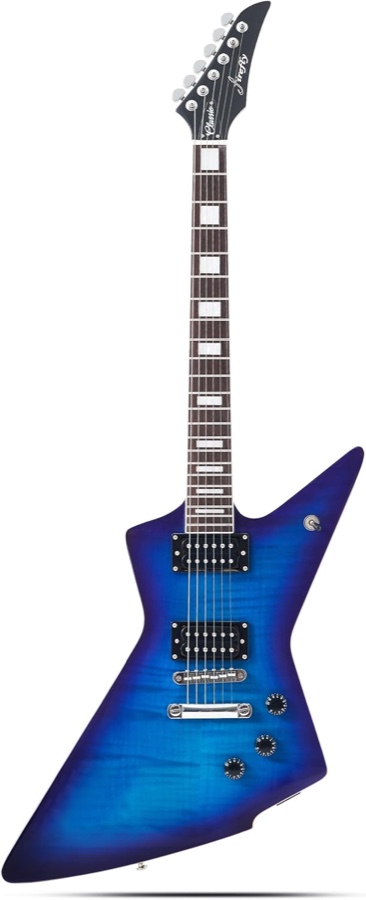
FFLX BlueBerry
Deep blue burst over a flamed top that shifts from navy at the edges to bright blue in the middle, with chrome hardware and cream binding.
Check PriceChrome hardware
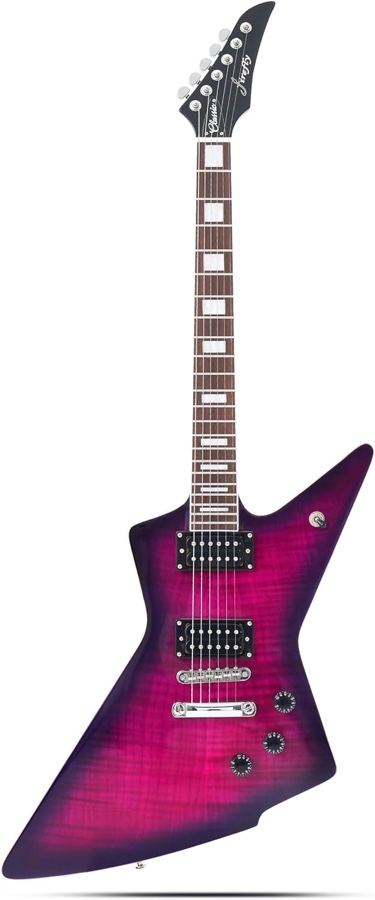
FFLX Purple
A violet burst with magenta through the center of the flame. Owners say it reads darker in person than in photos.
Check PriceGold hardware
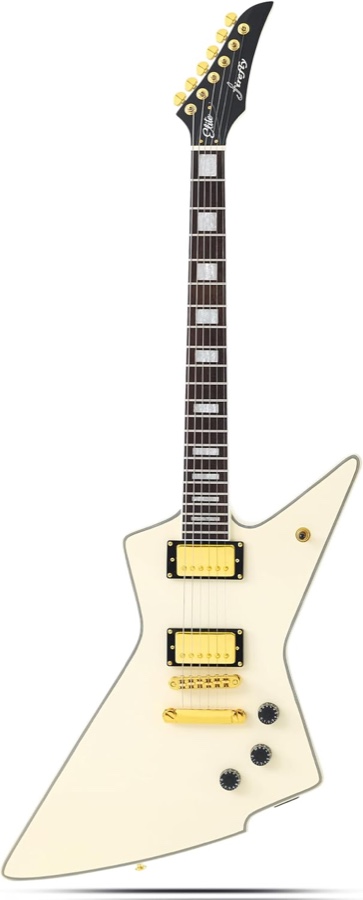
FFLX Cream
Vintage cream with gold hardware and a black headstock. The classic look for this body shape, and great under stage lights.
Check PriceBlack hardware
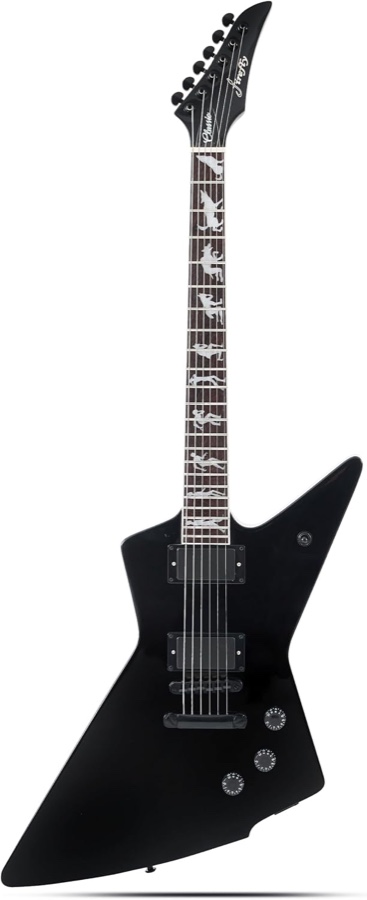
FFLX Gloss Black
All black, down to the pickups and bridge, with graphic inlays running up the fretboard. The metal player's pick.
Check PriceWhat You Get for the Money
Most guitars at this price save money on frets, nut and wood. The FFLX doesn't, which is why owners keep comparing it to guitars that cost three or four times as much.
Stainless steel frets
Harder than standard nickel-silver fretwire, so they wear far slower. Rounded ends keep the neck edges smooth.
Bone nut
Cuts cleaner string slots than plastic, which helps tuning stability and sustain.
Mahogany body
The traditional wood for this shape. Warm, thick and resonant, without making the guitar heavy.
Maple neck, rosewood board
A stiff, stable neck under a smooth rosewood fretboard. Owners describe the neck as straight and comfortable.
Two humbuckers
Full, hum-cancelling pickups that handle high gain without the buzz single-coils pick up.
Fixed bridge
No floating tremolo to balance, so string changes and drop tunings stay simple.
Pickups, Controls and Specs
Two humbuckers give the FFLX a thick, hum-free sound that holds together under heavy gain, with the long sustain a mahogany body is known for. The 3-way toggle picks the bridge, the neck or both. Owners call the stock pickups clear rather than muddy. They're also the part people most often talk about upgrading, so check cavity size before you buy replacements.
| Toggle position | Good for |
|---|---|
| Bridge | Riffs, palm mutes, power chords and solos with plenty of bite |
| Both | A fuller, rounder rhythm sound, clean or crunchy |
| Neck | Warm leads, clean arpeggios and bluesy bends |
Volume and tone knobs have a smooth, gradual sweep, so backing off the volume cleans up a distorted sound without killing it. The fixed bridge with a stop tailpiece keeps tuning steady and restringing quick. The neck is on the thicker side (one owner measured it at about 23mm), which suits players who like a full grip, and owners report no neck dive when standing.
Firefly FFLX Specs
| Model | Firefly FFLX solid-body electric guitar |
|---|---|
| Body | Mahogany, Explorer-style angular shape |
| Neck | Maple |
| Fretboard | Rosewood, block inlays (graphic inlays on Gloss Black) |
| Frets | Stainless steel with rounded ends |
| Nut | Bone |
| Pickups | H-H: bridge and neck humbuckers |
| Controls | Volume and tone knobs, 3-way pickup selector |
| Bridge | Fixed bridge with stop tailpiece |
| Strings | Nickel, six-string, right-handed |
| Finishes | BlueBerry, Purple, Cream, Gloss Black |
Who the FFLX Is For
Your first real electric
Stainless frets, a bone nut and a fixed bridge are things you usually pay more for. Here they come standard, so a beginner won't outgrow the guitar in a year.
You'll still need an amp and a cable. Budget for a basic practice amp, a tuner, a strap and a few picks.
A second guitar for drop tunings
Plenty of owners keep their main guitar in standard and set the FFLX up for D standard or drop C. The fixed bridge makes that easy to leave alone.
It's also a cheap way to get this body shape and a humbucker voice into your recordings.
A platform to mod
Players swap in active pickups, locking tuners or a black hardware set. The good frets and nut mean the parts you can't easily change are already done.
Measure pickup cavities and bridge post spacing before you order aftermarket parts. Not everything is a drop-in fit.
Firefly Guitar Reviews
Lightweight. Beautiful black finish w/gold Hware. Tuners work great. Pups sound really good. Neck is arrow straight, feels nice. Vol and tone pots have a deep swell. Fretboard is superb. Binding is just about p...
AC
The guitar is beautiful and I'm extremely surprised by how high quality it is. I'll cover some things I things that will make or break for most buyers. - Frets are smooth - No neck dive - Excellent high fret...
FFLX owner
Very nice guitar. Took a chance on the color, hoping it was not as pink looking as the online photos. Was very happy to find it was a darker purple. Very nice neck and fret work, better than my Epiphone and Jac...
Tom
Swap out the pickups and tune it down a step. The b string struggled to stay in tune in standard tuning where the rest of the guitar was perfect. However when you tune this guitar in D standard (which was my pl...
Jason
Probably the best $220 Ive ever spent on Amazon. For context, I own many many $1k plus dollar guitars to compensate for my poor playing ability. I took the gamble on this instrument out of nostalgia for cheap g...
Trainor
Complete shredder straight out of the packaging (guitar was wrapped in a light foam blanket inhaler which was then inside of a tight form fitting Styrofoam encashment snugly fit inside of the box) noticed a c...
GrimmSleeper
The Firefly Guitar Lineup
The FFLX is one of several Firefly series. Start with the body style and pickups that fit your music, then pick a finish. Prices below are typical advertised ranges and change with model, finish and stock.
| Series | Body style | Pickups | Good for | Typical price |
|---|---|---|---|---|
| FFLX | Explorer-style solid body | Two humbuckers | Rock, hard rock, metal | $199 to $260 |
| FFSP | Single-cut solid body, some flamed maple tops | Humbuckers or P90s | Classic rock, blues | $199 to $240 |
| FFTL | Tele-style, roasted maple neck on some models | Alnico 5 single-coils | Country, indie, blues | $199 to $260 |
| FFST | Strat-style double cutaway | Single-coil or humbucker sets | All-round practice and covers | $199 to $260 |
| FF338 | Semi-hollow double cutaway | Humbuckers or P90s | Jazz, blues, clean tones | $219 to $230 |
| FFMN | Modern solid body, Floyd Rose-style trem on some | Varies by model | Metal, whammy work | $219 to $260 |
| Acoustic | Full-size acoustics and acoustic-electrics | Fishman Presys on select models | Songwriting, open mics | $199 to $440 |
| Baritone | Extended 27" scale on the FFLX Baritone | Alnico humbuckers | Low tunings, heavy music | $199 to $260 |
Setup and Care
Unpack and look it over
The guitar ships wrapped in foam inside a fitted Styrofoam tray. Check the finish, headstock and output jack for shipping damage while you still have the box.
Tune up and let it settle
Tune to pitch, play for a bit, then tune again. Fresh strings stretch for the first few days, so a little drift early on is normal and not a fault.
Check the action
Fret notes all the way up the neck. Most owners find the action low out of the box. If a string buzzes or feels high, raise or lower the bridge with the thumbwheels.
Check intonation
Compare the 12th-fret harmonic with the fretted note on each string. If the fretted note is sharp, move that saddle back; if it's flat, move it forward.
Try every pickup setting
Play the same chord on the bridge, both, and neck positions, clean and then with gain. Roll the tone knob back on the neck pickup for a softer lead sound.
Pick your tuning
One owner found the B string drifted in standard but stayed rock solid in D standard. If you plan to tune down, move up a string gauge so the strings don't feel floppy.
If it doesn't play right
Shipping and changes in humidity move any guitar neck a little. If the strings buzz on several frets, sit high, or one string won't stay in tune, a local tech can adjust neck relief, action, intonation and the nut in one visit. Even an inexpensive guitar plays much better after a setup.
Before that, check each string has a few neat wraps on its tuning post. Only turn the truss rod in small steps, and only if you know how it works.
Looking after it
Wipe the strings and body with a soft cloth after playing to clear off sweat and oils. Change strings when they sound dull, look discolored or stop holding tune. A rosewood board only needs conditioning when it actually looks dry, a couple of times a year at most.
Keep the guitar away from heaters, direct sun and damp basements, ideally around 45 to 55 percent humidity. A padded gig bag or hard case is worth it for the pointed body corners.
About Firefly Guitars
Firefly started from a simple idea: you shouldn't have to spend thousands to own a guitar that looks good and plays well. The concept took shape in 2013, and after a few years of planning, Firefly launched in 2017. The guitars are built in China and sold alongside Guitars Garden.
The approach hasn't changed much since then. Take body shapes players already know and love, then fit them with parts that usually show up on pricier instruments: stainless steel frets, bone nuts, roasted maple necks, Alnico pickups and locking tuners, depending on the model. Early hollow-body and electric models have grown into a lineup of single-cuts, Tele- and Strat-style guitars, offsets, baritones and acoustic-electrics.
A Firefly isn't meant to sit in a case as a collectible. It's meant to be played, whether that's as a first electric, a backup for rehearsal, a guitar for recording in a different tuning, or a base for trying new pickups and hardware.
Frequently Asked Questions
Firefly is a guitar brand that makes affordable electric, acoustic and semi-hollow instruments. The lineup covers single-cut and double-cut designs, Explorer-style guitars like the FFLX, baritones and acoustic-electrics. Many models have mahogany bodies, rosewood fretboards and stainless steel frets at prices well below the big premium brands. They're built to be played: practice, recording and gigs.
Firefly guitars are made in China, using familiar tonewoods like mahogany, maple and rosewood depending on the model. Building there keeps costs down, which is how Firefly can fit stainless steel frets, bone nuts and, on some models, locking tuners into guitars that cost around $200.
Firefly is closely tied to Guitars Garden, which markets and sells its instruments. The brand traces its start to an idea from 2013 and launched in 2017. Details about the ultimate corporate owner aren't widely published. What the brand is clear about is its goal: classic guitar shapes with modern parts at a price most players can manage.
For the money, yes. Select models have stainless steel frets, bone nuts, Alnico pickups and roasted maple necks, which you rarely see on budget guitars. Factory setup and finish can vary from one guitar to the next, though. When yours arrives, check the fretwork, tuning stability, electronics and intonation, especially before you use it on a gig or a recording.
Most Firefly solid-body electrics are listed between about $200 and $260, depending on the model and finish. The FFLX has been listed near $219, and FFSP single-cuts usually run $200 to $240. Acoustic and specialty models can cost more, with some higher-end acoustics over $400. Prices change with sales and stock, so check the current price before you order.
Firefly guitars are sold online through Guitars Garden and major online marketplaces, where specific models and finishes come and go. Limited colors and less common configurations sell out often. Before you order, confirm the exact model, specs, seller, shipping cost and return policy. Used Firefly guitars also show up on resale sites from time to time.
Solid-body electrics, semi-hollow and hollow-body guitars, acoustics, acoustic-electrics, baritones and a few bass models. The main electric series are the FFLX, FFSP, FFTL, FFST and FF338, each with its own body style, pickups and feel. The range runs from classic rock and blues guitars to instruments built for low tunings and specialized techniques.
Yes, many of them are. A fixed-bridge model like the FFLX or FFSP is easy to restring and keep in tune. As a beginner, focus on a neck that feels comfortable, a weight you can manage and low string action. If the strings feel high or the guitar buzzes after delivery, a basic setup from a local tech fixes most of that in one visit.
The FFLX is Firefly's Explorer-style solid-body electric, known for its angular body and two humbuckers. It has a mahogany body, maple neck, rosewood fretboard, stainless steel frets with rounded ends, a bone nut and nickel strings. It's built for big distorted tones and long sustain, so it suits classic rock, hard rock and metal. It comes in BlueBerry, Purple, Cream and Gloss Black.
The FF338 is a semi-hollow guitar, the kind usually heard in blues, jazz and classic rock. Its body adds an airy, resonant quality but can feed back at high gain. The FFSP is a solid-body single-cut that handles heavy distortion with much less feedback. Both come with different pickup options, so choose by the sound and styles you play most.
Many Firefly electrics do, including select FFLX, FFSP and FFTL models. Stainless steel is harder than standard nickel-silver fretwire, so it wears much more slowly on a guitar that gets played every day. Some models also have rounded fret ends for a smoother feel. Fret material varies across the range, so check the specs of the model you're looking at.
Yes, as long as the guitar is set up well and maintained. A guitar with stable tuning, working electronics and the right pickups can sound professional on a recording regardless of its price. For regular stage use, check the output jack, switch, tuners and strap buttons. Your amp, effects, interface and playing will shape the final sound as much as the guitar.
A properly set up Firefly should hold its tuning under normal playing. Tuning stability comes down to the nut slots, how the strings are wound on, the tuners, the bridge setup and temperature changes. Some models have locking tuners, which speed up string changes and cut down on slipping. Floating tremolo guitars need more careful setup than fixed-bridge ones.
Yes. Popular upgrades include new humbuckers, pots and switches, tuners, bridge hardware, and nut or fret work. Since the guitars cost so little, many players buy one specifically as a mod project. Pickup cavities, bridge spacing and control layouts won't fit every aftermarket part, so measure before you order.
With regular care and sensible storage, many years. How long yours lasts depends on the individual guitar, how often you play it, where you keep it and how well you look after it. Stainless steel frets on select models resist wear, and tuners, pickups, switches and bridges can all be replaced. Keep it away from big swings in humidity and temperature to protect the neck, finish and hardware.
Find Your Firefly
Pick the finish that grabs you. Underneath, all four are the same mahogany guitar with stainless frets, a bone nut and two humbuckers, ready for your amp.
Check Price